Showing posts with label General. Show all posts

Wednesday, September 28, 2011

Greater protection for animals

Just to share the thought and the cause:

Greater protection for animals

Wednesday September 28, 2011

THE announcement by Veterinary Services director-general Datuk Dr Abdul Aziz Jamaluddin of the new Animal Welfare Act will mark the next phase of the law relating to animals in Malaysia.

Now is the right time to replace the old Animals Act 1953 that animal welfare groups regard as having no bite to curb animal abuse. The new Act hopefully will accord greater protection to animals in Malaysia.

There is a need for stronger laws to assure the well-being of animals and reduce their suffering.

The obligation of humans and owners in ensuring the welfare of animals is not merely providing food and water. It needs to be extended to providing adequate shelter, protection from – and treatment of – injury and disease, and proper handling.

In the coming Act, I would suggest the Department of Veterinary Services consider three important keys with regard to animal welfare issues: obligation of people towards animals, codes of welfare to establish the minimum standard, and regulations to monitor the use of animals in many aspects of life like food, entertainment and research.

I would also suggest the department consider a moderate model in preparing the provisions for the new Animal Welfare Act.

The Universal Declaration on Animal Welfare, Universal Declaration on Animal Rights, the UK Animal Welfare Act 2006 and New Zealand Animal Welfare Act 1999 can be possible references.

The most important consideration is for the new Act to have the best interest of animals at heart, and at the same time suit the local circumstances.

There should be no further delay in tabling this new Act in Parliament.

Delays will affect access to justice, and justice delayed is justice delayed. Animals also have the right to be treated and respected accordingly in the Malaysian legal system.

ARIF FAHMI MD YUSOF,
Melbourne, Australia.

Saturday, August 27, 2011

End of Ramadhan

It has been almost at the end in the line for Ramadhan  - if it could be imagined as a horizontal line in our life. Time flies fast, Ramadhan is due to meet Syawal within days. The start of Ramadhan was also actually the end of the timeline that we planned initially to finish our fieldwork so that we may concentrate on library visits for the continuing literature review. But by the start of the month, for my case, there were about 7 peoples left out in the categories that I classified as harder to reach. Nevertheless we both finally have managed to complete the work by today, which is virtually the last working day for Ramadhan by covering all of the categories in the target.

As to the prospect to win cooperation of people in different categories involved in the research, I could safely say at this point that the assumption that people in the country are not really helpful with research, may be rebutted. I started with the snowball strategy in contacting the prospective participants, beginning with an acquaintance and my former lecturer. They led to other contacts. It also led to another.

But in most situations, mainly due to diverse range of categories of people that the research involved,  snowball strategy only could not help. The reason is people normally would lead contact of others in the same category. Therefore, we also made efforts to contact people with contact information that we found in various media. Out of four communications sent out either through e-mail or snail mail, I could say that one would respond either agreeing to meet or lead to another contact. They were many we found were really helpful to others who they do not even know or ever meet. This always works with the categories of people that I feel the hardest to reach.

In case of public officials, approval of the gatekeepers is a crucial step to go through. There were some sectors which are welcoming with research effort of this kind. But there were many others who were not responsive despite several follow up calls.  

It was indeed not all in the upper position of the ball. There were people who agreed to meet but then kept silent when contacted for appointment. There was one who had also expressed his agreement but then fell ill that he could not fulfill the appointment fixed. There was also a person who was unable to meet at the specified time and date - the fact that I knew only after hours of driving from home.

Some were suspicious about who we really are, or whether we may have hidden agenda. In the course of the work, we also stepped into places deemed for some to be unacceptable to be. We were also affected with an inter-religious issue which even by mere presence in the place itself carries risk of prosecution.

But this, I believe, are matters that are unavoidable in research life especially during the fieldwork involving the kind of issues such as ours. 

Ainaa, lately, also fell ill almost every alternate week, she was always down with fever and cold. At present, she is recovering from mumps - rare to be found now, but she was inflicted with this viral infection. It is unavoidable to think that the stress of our research must be part of the contributing factors. Being in the child care center is also a factor apart from the hazy and dusty environment of the industrial area. She must be hyper sensitive to the allergy triggers. 

The phase indeed opens up a new horizon, not only to our research, but to our life and view about the world. For both of us, brought up within the same circle of people throughout our life, this work is a real eye opener - or a turn to choose in a junction ahead - about the reality on the ground, about our relation with others, about how we are perceived by others, about so many things that we either refuse or fail to aware - that really challenged our earlier perceptions, convictions and belief about life.

Ramadhan wal Eid ul Mubarak.

Wednesday, July 20, 2011

Suria KLCC Park


Another photo page in a series of photo posting today... a lazy day after two days of long journey to Kuantan and Muadzam Syah in the past two days for meeting with the research respondents. 

Last Sunday we went to KLCC wading pool. It was fun especially for the kids. The two brothers were really enjoying the day whilst Ainaa seemed to be fear for her safety in the kids water park. Throughout the afternoon,  she remained in our cuddle, refused to go into the water.


Istana Kehakiman

Istana Kehakiman aka Palace of Justice
Putrajaya

Mini Maha 2011


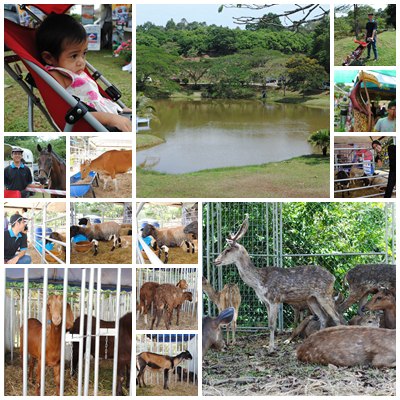
Mini MAHA 2011, held at Indera Mahkota, Kuantan Pahang.

Sunday, July 3, 2011

Special gifts

We are still in the home country for the fieldwork. In the course of this up-and-down process, we also came across with more than what we expected. In Kuantan, we met with an old friend from the university that we studied before. He had just finished his PhD and already published his first book. Congratulation our dear friend. We hope to follow suit.


In FRIM, we met with Dr Lim Hin Fui, a senior researcher in the forest research institute. He gave us a special gift - he said a gift for life. It is indeed. It is about healthy food which is a good guide for everyday food to avoid diseases. It is ironic that we are always worried about so many things and risks against life and healthbut in fact it is the food that we take every day that could be the real cause for concern.  

Saturday, June 25, 2011

The dying dinos in a sad playground

We went to a playground bringing the children to play at a playground in Nilai 3. It is only about 5 minutes drive from our house. The sight of replicated dinosaurs and a big playground from far when driving through the famous shopping destination one day, brought us there that afternoon. It was just for the kids to have fun.


But coming close, this is the real look of the kids destination. And this is the fate of the dinos ..
The slide has broken. The rubber mat on the ground has deteriorated. There was also a long rope tying from a pillar and lying down on the ground. It is dangerous for the children who may stumble upon the rope. There was also irresponsible burning of rubbish near the playground with wind heading to its direction.

Sunday, June 12, 2011

Animal lovers

As part of our research project, we went to Kuantan a couple of weeks ago. Once I finished my work in an office, I followed the father to meet with Dr Lian, a vet, and Julia, an animal rescuer. They are also active in an animal care society in the town. 

As to me, having been involved in an area full of dispute - when the world is felt like filled in by people struggling for none but self-interests - I was personally touched and amazed seeing such wonderful people. They are really passionate with the work, taking responsibility and care of stray cats and dogs, educating people to have some sense of care for the animals with the hope to reduce violence against the innocent creatures.

Now, I see stray cats and dogs with different views. I was not really care about the creatures before, but the people such as Julia and Dr Lian really made me change the perspective. 

I am also quite shocked to realise that many Muslims believe that dog itself is haram (prohibited) and touching dog is haram but in fact it isn't. It is only considered as dirty and we are required to cleanse ourselves in a certain way. Because of the mistaken belief, many justify the act of violence against dog. Even at times dogs were made accountable of their act when they harmed people in spite of lack of responsibility. So, are we human rationale enough?


Tuesday, May 31, 2011

No ironing

The electricity tariff is raised again. In the country, the rate is regulated by the authority rather than the service provider. As usual, the trend is the media would be busy giving advice to the consumer on how to reduce electricity usage. It's good in the sense that the consumer should be aware of the cost that electricity would take against the environment. Everyone should do his or her part somehow.

Apart from the role of consumer as individual, we think, a lot more could be done by the authorities who are decision makers in many sectors which have far bigger impact to the society and the use of the resources.

One of the things that I really hope to be done is the change of school uniform for the children especially in the primary school. The school uniform in use currently is in white and use material that need to be ironed every time.  

If school uniform could be changed to t-shirt and track suit in dark colours, a lot of electricity usage could be saved, a lot of energy and time could be spared for other things. Mothers - many think that ironing is the most dreadful chore to do - could have more rest. Money could be spent for other needs which prices are on the rise too. 

T-shirt I think is better to suit the lifestyle of the children. They would be free to run around without the need to take care of the 'whiteness' of their clothes. It is better for the hot climate in the country. It is cheaper in cost, lasts longer and easier to wash as it could be washed together with other clothes. The most important thing is it is practical.

Thursday, May 12, 2011

Missing the blue sky

Since yesterday, the days look gloomy with haze. The air index has reached up to the unhealthy point in some places. Nilai was rated the third highest but still within medium phase.

When we went out of the house yesterday morning, we saw a neighbor burning some rubbish in the compound of his house. With this type of air quality, could he be more considerate? 

Wednesday, May 11, 2011

Comparing prices

In the news yesterday, it was reported that about 52% of the population in the country have income less than RM3,000. I am not sure how many are in the majority portion.

When we came back since last month, we really feel that the price of many consumer basic items especially foods have increased dramatically. They include rice, sugar, flour, fishes and meat, milk and baby items - those every day consumptions. Even small fishes like kembong and selar kuning could be more than RM10.00 per kg. In looking for a rented house, we could also feel that the house rental is also on the rise. We also brought Ammar for dental check and to our surprise it costs us RM200.00 for checking, cleaning and filling. That is the amount covered a year by our employer for a staff.    

For us, this trend is worrying. With the price such as that even RM3,000 would not be sufficient to cover basic expenses. That is the amount of salary generally for fresh graduates in the country, depending on the sector. 

Comparing apple to apple, we feel that grocery items are cheaper in Melbourne than the home country. Let say, we have AUD$3000 in Melbourne, the amount would be sufficient to cover comfortable lifestyle. We could get good rice as cheap as $1.60 per kg, fresh milk at $1.00 per litre, sugar and flour at $1.00 per bread at $1.09 (the supermarket brand only), Ainaa's formula milk $22.00 per tin of 1 kg, diaper $15.00 for about 60 pieces (supermarket brand). 

Comparing the price to Malaysia: RM2.60 for medium quality of rice, RM5.00 per litre of a supermarket brand of fresh milk, sugar RM2.00, flour RM2.00 per kg, RM20.00 of 1 kg formula milk, RM26.00 for diaper (supermarket brand). 

But, in contrast to us in Malaysia, medical and other services like car repairing and child care are expensive in Melbourne, but some subsidies are given to citizens.

Cooked foods, depending on status of the provider, might be more expensive in Melbourne compared to Kuala Lumpur. But pizza is cheaper in Melbourne - $8.00 for family size with abundant toppings compared to the popular pizza in Malaysia - RM23.00 for family size with not as much toppings. In Malaysia cooked foods are easily found sold by small hawkers and in night market. There is no such outlet in Melbourne.   

We also found a fact which makes us wonder: The items that are imported from Malaysia selling in Melbourne would cost us the same price as in Malaysia, but the items imported from outside, let say Australia, selling in Malaysia would cost us the same value. 

We give an instance: the price for kipas udang ketchup in Malaysia is RM4.50 last year (but now RM5.50). In Melbourne the price is AUD$4.50. When we arrived back in Melbourne next couple of month I believe it would be AUD$5.50. But the price for spaghetti in Melbourne, a good quality is about RM2.50 per packet of 500gm but supermarket brand is only $1.00. We also could get the instant sauce for $3.00 per bottle. But in Malaysia the price of spagetthi is RM4.50 the same brand, and the instant sauce is almost RM10.00.

Clothings I think are of same price between the two locations, but since the second hand good quality clothings are abundant in Melbourne, we could get more.  
  
Whilst Melbourne record the most expensive housing rental in the world, we in Malaysia have the most expensive car in the world. Melburnians afford to pay cash for their first car as luxurious as Camry, but it is unlikely for us who may only afford to buy a small car 850 cc with the same amount of money.     

Tuesday, April 26, 2011

Escape from winter

We arrived at our lovely home country last 2 weeks for our next phase of the research project. It was a very long journey of 8 hours day flight without the kids sleeping even a second. It must be a mistake choosing a day flight with the kids.  

When we arrived at 3pm, it felt so hot. We felt like the home country is hotter than before. The kids were the ones suffered more especially the baby who suffered from cold and diarrhea for days. I think, it must be because of the different climate. They are now adjusting well. Luckily, the house that we live in has air-conditioner to keep us cool. 

We started with silaturrahim visits to Kedah and Pahang in the weekend. We also had an occasion  to see our friends in the faculty for our paper presentations in a discourse held by the faculty last week. Seeing the families and friends make things feel better.

We also bumped into some students from the classes that we taught before. Many of them are in the final year now having final examination. All the best for the examination. One is about to get married right after the examination. Congratulation. One student, Aqeeda, said she read this blog and finds inspiration in it. Hopefully it does leave a trail of inspiration to us too.  

The kids also had started their school in a kindergarten near the house that we rent for these few months. They seem to enjoy the school which has various activities including swimming and sport. The only thing they lamented almost every day is they have to take short nap for 30 minutes every day after coming back from school in the afternoon care. 

The baby is still adjusting too. She is still crying in the morning when we send her to her carer. She dislikes strangers very much. In the grandparents homes, she clings to us so much that cause me back pain for having to carry her a lot.   

As to the house that we live in currently, it is so lovely. It has a fish pond in front and a playground at the back. The kids take the task of taking care of the fishes. They feed the fishes every morning and afternoon. They also do not forget to say hello and goodbye to the fishes every time they go to and come back from school. "Hello little fishes" ... "Good bye little fishes", say Ammar every time. 

Nilai has also changed. It has now its own landmark called Dataran Nilai with a park and a big commemorative clock. It also has a giant supermarket called Tesco apart from Giant that was there before. But the outlook of Giant has also changed with new shops surrounding the area. We also feel that the small town before has been livelier.

Friday, March 18, 2011

Friends

People say the episode of life that we would miss so much is the life in the university. As for me, its true - am still and always miss the friends and events in the long left campus. The memory really held with it I think all happiness except the stress facing the examination period that I don't think I can go through it again. Seeing someone, best friends from the past really make a day. Moreover, for me, getting together with friends is a rare luxury.

Last Tuesday, Ina and I had a short get-together with Laily. Laily and Ina are good friends from my university at undergraduate level. Ina is also studying here. Laily came to Melbourne for a visit. But for now, since not really have time to write much on this - I borrow the post from ina. Thanx Ina.

I may update later if possible.

Tuesday, March 15, 2011

Relief

A word from James when I opened email this morning, commenting on the disaster at Japan:

"No matter how stressful research can get, there are always people out there with bigger problems. When we feel stressed it's important to keep things in perspective and contribute where we can."

Thank you.

Our condolence and prayer to the people affected. Am really shocked too with what happened. May things get better for the people.

May things get better for us too.

Thursday, March 3, 2011

Subjective vs objective

Farhan is practising times table since last week. The teacher gave him a set of goals to accomplish and sent note to parent informing the goal for the kids that particular week. They encourage the cooperation of parents to help the kid to achieve the goal. During meals even he asks us to question his times table. Last week, his goal was 2 times table. And once the previous was achieved, this week's goal was 3 times table. For a grade 1, I think, he was quite fast in understanding how the tables actually work. He said, the first thing in the morning he is to do at school is to work on achieving his goal. 

It is interesting that kid of grade 1 talks about achieving 'my goal'. Every kid has his/her own distinctive goal. They can move forward according to his own capability. The kids learn by setting goal and move towards achieving it. 

We view this as a sheer difference compared to the education system in the home country. Here, we see, students are assessed subjectively rather than objectively. I mean in our system, the ability and achievement of students is assigned by number and comparison against the other members of the class. But here, the report cards given to parents at the end of each term contain no such numbers. Rather it contains what the students have learnt and what they have achieved. For example, he has been able to read certain level of books but he needs to improve on aspects of pronunciation (eg), he knows to count up to 100 and backward, he is able to understand basic math plus and minus, he is able to write his own story, interact well with other members of the class etc.

There is no written examination at this stage. The focus is the basic communication, language, numeracy and every day skills. It also stresses to instil confidence with one's own capability.

There is no homework except reading a story book of his level of reading capability supplied by the teacher every day.

On the other hand, the way our education system is presented, insofar that we see, students are expected to follow the system rather than the system  checking the need of students and adjust accordingly. With the bulk of subjects to be undertaken in the early years and big number of pupils in one class, some may be left out in the fast felt moving of the system. I have heard a teacher lamented about one whole class of pupils in year 6 of his school are not able to read properly.   

Prior to coming here, Farhan has been seated for written examinations for his 4 and 5 year old kinders. They were for Malay and English as well as Math. Despite the fact that he was unable to read and count at that time, he took the examination. Once he got  number 2 in the class, another number 9. I forgot the numbers for the other earlier occasions. Almost all members of the class got almost 100. So the difference was a matter of a very few points. I found later what happened was that the examination questions given were practiced before and the kids, who undoubtedly have marvelous memory,  simply put the answer in their memory without understanding the things. I also found that the kids were confused with the alphabets. Both languages, English and Malay, use same alphabets but different sounds. But the kinder use phonetic system for English and  the traditional approach for Malay. At the end of the day for the two years, Farhan even couldn't tell how  actually A sounds.

Saturday, February 26, 2011

Pluralisme

For several days I actually waited for Dr Asri to talk something about this:

Pluralisme Agama: Politik, Fanatik Dan Realistik


Really admire his scholarship and manner of discussion.

Thursday, February 24, 2011

Of the unrest

We are really sad with the sickening unrest in the middle east countries. This could be a great lesson that this is the ultimate end of countries which leaders prone to think that the power that they hold is of their birth right. They are willing to do anything to preserve their power at the expense of citizens' life. Is this the public interest matter that they are talking about to justify the deprivation of those of the individuals'?

What makes us more saddened is the name of Islam that they carry to justify their actions.

Have we learned not from the history? It repeats again and again.

May justice for the citizens prevail. We pray to Allah to show them and us the right path in life.

Saturday, January 22, 2011

The simply ‘you’

This week, I am preparing for the ethic approval application form. In preparing certain necessary translation from English to Malay for some documents, I am stuck with determining the most suitable word to replace the simple word ‘you’. What would be the most suitable word in Malay in the context of the document?

The aim is to prepare a plain simple language letter and form.

For instance, the sentence is:
‘You are invited to participate…’.

Would it be the general word such as anda, kamu, awak or engkau? All means the same, you. But the three last words may be devoid of relevance when it comes to context. The first is always used in the notice board and I don't feel it suits my purpose.

Or would it be the long usual highly formal phrase with so many slashes like this:
“YBhg. Tan Sri/Tun/Tan Sri/Dato’/Prof./Dr./Tuan/Puan/Cik,”

Sufficient? Have to think of the pool of addressees first.


No more plain and simple.

Perhaps I am no certified translator, hence the problem.

But how many of us use the word in Malay when saying ‘you’ in Malay conversation? In the usage, I think, there are two schools. One school prefers [‘I’ and ‘you’] ie the English words. Another prefers [‘ana’ and  ‘anta’/‘anti’] ie the Arabic pronouns.

Think, which school you are in?

So, the result is ‘campuranisation’ in the Malay conversation. This is what makes the DBP cracks their head in eliminating the rojak in the future direction of the language. Who knows that in future the word you itself is made as part of the language, with the spelling: “yu”. As the development of language is affected by its usage and preference, this is not impossible to happen in near future.


Tuesday, January 4, 2011

The new year and the revival

Welcome the new year.

For this, we would like to share this thought, by Prof Shad Saleem, for us and to friends in the same profession.


In law, West is not really best
While most of our law books draw from ‘wisdom’ from the West, there is much about jurisprudence to be learnt from the great Asian civilisations.
"WITH the end of the year drawing nigh, thoughts turn to the state of legal education in this country.
Many advances have been made since the inception of the first local law programme at the University of Malaya in 1972. However, some debilitating drawbacks remain. Legal education in this country is too profession-oriented and not sufficiently people-oriented.
It is text-book based rather than experience-based. It is too West-centric. Only the last issue will be addressed in this article.
Course content: Despite 38 years of experimentation, the structure and content of our courses, the choice of core subjects, the categories of thought, the fundamentals, the methods of analysis and research, the history of each subject, the books and the icons all remain Western.
Legal education today is as much a colonial construct as it was during the days of the raj.
Yusef Progler points out that most university courses in Asia follow a similar trajectory. We first identify the great white European or American men of each discipline and then drill their theories and practices as if these were universal.
Centuries of enlightenment in Japan, China, India, Persia and the Middle East is totally ignored.
It is as if all things good and wholesome and all great ideas originated in the crucible of Western civilisation and the East was, and is, an intellectual desert.
> Jurisprudence: In legal philosophy, for example, a book on American or English legal thought is referred to as “jurisprudence”. In contrast, a book on Islamic, Chinese or Hindu legal thought is described with the prefix “Islamic”, “Chinese” or “Hindu” jurisprudence. The assumption is that Western ideas are universal whereas ours are merely parochial.
A typical course on jurisprudence in a Malaysian university begins with Plato, Aristotle, Locke, Austin, Bentham, Hart, Kelsen, Pound, Weber, Ehrlich, Durkheim, Marx, Olivecrona etc.
Titles written by scholars and thinkers from Asia, South America and Africa are nowhere to be found.
The Mahabharata, the Arthashastra, the Book of Mencius, Analects of Confucius and the treatises of Ibn Khaldun, Ghazali, Ibn Rushd, Mulla Sadra, Jose Rizal, Benoy Kumar Sarkar, Yanagita Kunio and Naquib al-Attas do not appear in our syllabi.
In Austinian fashion, the concept of law is tied to the commands of the political sovereign even though most Asians and Africans feel the pull of religion and custom and regard them as part of the majestic network and seamless web of the law.
> Categories of law: The rigid compartmentalisation of knowledge developed in Europe in the 19th century is preserved. As in the West, we separate law from morality, public law from private law and crime from tort even though such artificial dichotomies are alien to our traditions and are often impediments to justice.
In most Asian and Middle Eastern systems, morality is legalised and legality is moralised. The law of crime is also the law of tort. Law relating to rights and duties applies equally in public and private spheres. Such a holistic approach has positive implications for human rights.
> Public law: Generations of students are uncritically led to believe that the seeds of constitutional and administrative law were planted in Europe and North America by such historical documents as the Magna Carta 1215,Declaration of the Rights of Man and the Citizen 1789 and the United States Declaration of Independence 1776.
What is ignored is that the ideas of limited government and constitutionalism were born in the religious doctrines of the East.
Taking Islam as an example, we can point to the fact that the denial of state sovereignty in Islamic jurisprudence preceded Locke’s and Rousseau’s idea of the limits on state sovereignty by hundreds of years.
The idea of government as a trustee is mentioned in the Holy Qur’an (4:58). The citizen’s duty to obey the law is conditional to the duty of the ruler to obey the Creator.
Locke and Rousseau, Gandhi and Martin Luther King built on this idea to propound the theory of civil disobedience.
In Islamic theory, political as well as socio-economic rights are given legitimacy.
Prophet Muhammad’s sermon at Arafat is one of the world’s greatest human rights declarations. More than 1,400 years ago he spoke about liberty and property, racial equality, women’s rights and the ruler’s subjection to the law.
If his words had been uttered by some Western luminary, they would have adorned the walls of law schools all over the world.
In the Islamic criminal process there is a legal presumption of innocence. Evidence of agents provocateur cannot be used. Religious tolerance is required and pluralism is permitted (2:256, 109:1-6, 10:99). The concept ofshura (3:159) or consultation paves the way for a whole regime of consultative processes.
Modern principles of administrative law like natural justice and proportionality have their basis in the Holy Qur’an.
The ombudsman principle attributed to the genius of the Scandinavians was known to Islam through the system of Hisba, the office of the Muhtasib and the existence of Mazalim courts.
Islam’s concept of the universal ummah is in line with the process of globalisation and the growing movement for international citizenship.
The subject of alternative dispute resolution parrots a discourse on arbitration, conciliation and mediation and ignores many indigenous or informal institutions and procedures for resolving discord that existed in our history and can be revived.
The course on Law and Economics studies emerging international protocols but not the clear injunctions in Islam, Christianity, Hinduism and Buddhism on environmental and consumer responsibility.
> International law: The syllabi of public international law courses fail to mention that long before modern humanitarian law built protection for civilians, non-combatants and prisoners of war, many Eastern systems like Islamic international law had already worked out a set of principles for the conduct of war.
Some of these principles exceed the standards of the venerated Geneva Conventions.
Sadly, Malaysian as well as Asian legal education fails to recognise that many of the law’s crowning glories actually originated in the East. Obviously colonialism has left its indelible mark.
> Call for action: There should, therefore, be a concerted effort to re-educate colonised minds; to revisit our syllabi; to substitute imported mental baggage with our own treasury of thoughts.
This indigenisation of our syllabi is not meant to shut out the West but to give to our students a bigger picture of knowledge and to increase their choices.
In the background of pervasive Western intellectual domination, indigenisation would assist a genuine globalisation!
Academic Boards of Faculties, University Senates and accreditation authorities may wish to go beyond form to the actual content of our syllabi and to insist that our garlands of knowledge must be built with flowers from both Eastern and Western gardens.
A helpful site for some Third World titles is www.multiworld.org. There is no dearth of scholars from the South who could be co-opted to advise us on how to tackle the problem of educational enslavement."

Monday, December 20, 2010

A note on this week’s weather

The severe wintry weather of the northern hemisphere must have come to the southern hemisphere. Glenroy is in summer - but with the temperature plummets as low as 7 degree especially at night, the weather this week is just like winter. There are intermittent rains, strong wind bringing chill air, thick grey clouds in the sky and even snowfalls in mountain areas. As November, it is said that this month is the coldest December in at least 53 years. As a result, we have to take out all the thick blankets, socks and jumpers kept for the winter for us to keep warm. With the range of temperature within a day is very wide; very cold at night and warmer during the day especially in the afternoon, noses also start complaining…


Earth, Man and Allah – The Ultimate Creator

Human being is a book
A story line foretold with a proper look
God’s signs shown in the cosmos *
But sad to say Man has forgotten all those

(Qalamuddin - http://www.islamicpoem.com/?q=taxonomy/term/7)